
This trip was a 2 day tour from Bangkok to Kanchanaburi in eastern Thailand that took in the River Kwai Bridge and the Death Railway. Tried to be a bit more respectful in writing about this as it is a fairly sensitive subject.

The Thai Army most effective weapon (circ.1941)


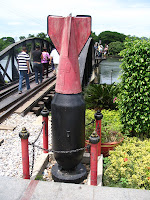
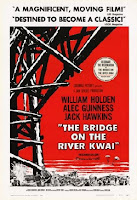
Next, on to the actual River Kwai (or Kwae) Bridge that was made famous due to its bombing by the Americans (just as much by the movie “Bridge on the River Kwai). I remember watching the movie as a kid some time ago (and like all Asian tourist sites, if there is a movie tie-in you can be sure that the DVD is on sale at a near-by stall). I pictured the Bridge to be a lot bigger structure, again the influence of the movie. Found out the movie was shot in Sri Lanka and (obviously) the movie Bridge was “Hollywood-ed Up” to make it more impressive. Still. The Bridge and Railway was originally bombed but has been re-built as a lot of the railway is still used by tourists and locals. The movie only showed a couple of carefully targeted bombs that blew it up. In fact they dropped a shit load of bombs hoping one would hit it. They’ve recovered a lot of them and this photo shows one which I’ve been assured has been de-fused (though typical Thai safety standards are pretty free and easy so I didn’t have the courage to start tapping on this thing).

It only takes about 5 minutes to walk one way across the Bridge (again my movie induced impression was shattered) and only about five people wide. It is a fairly solid structure considering the conditions it was built under. The tourist guides point out that for each sleeper on the railroad a POW died. The men were worked to death under terrible conditions, being starved and beaten by the Japanese prison guards. They would literally drop like flies while it was constructed.

Paid a local vendor to take my photo and you can see why so few photos of me have been exhibited (you can see why these people sell t-shirts for a living and not a more complex profession). Had hoped to get a shot with the Bridge in the background while I posed next to an unexploded bomb. Managed to get most of the Bridge in, everything below my forehead (shame, my do was looking great that day) and something that may be a bomb or could be a bus. The local stall sold a t-shirt proudly proclaiming the local attractions, with a Thomas the Tank like picture with the title “THE DEATH RAILWAY”. Typical of tourist attractions, almost anything that the locals can add the prefix “Death” to they will.


To be continued...
Again the background stuff (I know you love to read about or skip). The railway was built from Burma to Thailand during the Japanese World War 2 occupation. It was built by Asian labourers, British, American, Dutch and Australian Prisoners of War interned by the Japanese and were treated extremely inhumanly. About 200,000 Asian and 60,000 Allied POWs worked on the railway. Of these, around 100,000 Asian labourers and 16,000 Allied POWs died as a direct result of the project. Almost 3,000 Australians alone died.
Trying to found out the Thais history in the war is a little difficult. I think most people would think that it sided with the Allies, given the way Japan is portrayed and the various sites dedicated to Allied soldiers I visited. After some investigation (not from the tour guides) I learnt that after a brief fight with the Japanese (a wopping 8 hours in total) the Thais surrendered and allowed Japan passage through its country in exhange for terrorites taken by the French (in Laos and Cambodia). The Thais allied themselves with Japanese for the remainder of the war until almost until the very end and then swapped governments and proclaimed itself an ally of the US (like betting on a horse race and being allowed to change your wager 10m from the finishing post).
Trying to found out the Thais history in the war is a little difficult. I think most people would think that it sided with the Allies, given the way Japan is portrayed and the various sites dedicated to Allied soldiers I visited. After some investigation (not from the tour guides) I learnt that after a brief fight with the Japanese (a wopping 8 hours in total) the Thais surrendered and allowed Japan passage through its country in exhange for terrorites taken by the French (in Laos and Cambodia). The Thais allied themselves with Japanese for the remainder of the war until almost until the very end and then swapped governments and proclaimed itself an ally of the US (like betting on a horse race and being allowed to change your wager 10m from the finishing post).

The Thai Army most effective weapon (circ.1941)
First stop on the trip was to the JEATH War Museum in Kanchanaburi. JEATH stands for the main combatants involved in WW2 in the area; Japanese, English (anyone of Scottish, Welsh or Irish descent who fought in the war will be glad to know you are classed as “English”), American/Australian (we have to share a letter), Thailand and Holland. The museum, unfortunately, is a woefully bad excuse to commemorate such a significant event. Like many so called tourist attractions in SE Asia, you are prohibited from taking any photos while inside. This might be to protect the intellectual property of the displays or a mark of respect to those it is dedicated to. In this case it is to protect the outside world from seeing for themselves this awful collection of sub-standard displays. There are some relevant photos of POWs and artists impressions of life in the camps and on the railroad construction. These are presented with “information” details put together in such a way that the curator’s office must be staffed by the (now infamous) blind kindergarden kiddies that seem so influential in any work of major importance in Asia. The information ranges from being inaccurate, poorly written or misspelt rendering it incomprehensible. Displays put together with all the care and visual attraction of an amphetamine addicts attempt at finger-painting. A lot of the “artifacts” are photocopies of foreign newspaper articles that have been stuck on the wall. I understand that a lot of the museum is put together by local Thais where English is not their first language and it might be a bit thoughtless of me to be so critical of their efforts, but I can imagine the outrage in Australia if a similar museum was built dedicated to another nation that was so poorly put together. The second photo of the fake guard tower (one of the few I was allowed to take) offers some good advice to anyone thinking of visiting this place.


After exiting the museum there is a fairly flash statue dedicated to a Japanese soldier Takashi Nagase, the only such monument at the place. He worked as an interrupter during the construction of the Death Railway. He apparently had a change of heart once the Japanese lost the war and remained in Thailand, became a Buddhist monk and set up a peace foundation that assisted in setting up the museum. There were a number of elderly tourists at the museum from Australia, England, Europe and US, some I imagine were veterans themselves and I suppose the museum has attracted a lot of them over the years. Anyone who has ever listened to the RSL’s Bruce Ruxton or has met a veteran of the Japanese theatre of war will know that they do not regard the Japanese fondly. Imagine the reaction of elderly gentlemen such as these who come to this place, endure the poor excuse of a memorial to their sacrifices and then are confronted by the only decently constructed thing in the place which turns out to be a dedication to the enemy! (How about we erect a statue of Osama Bin Laden at the World Trade Center site). Found out later that this poor effort of a place has received some criticism and a new (and improved) museum has been built. Asking the tour operator why don’t they go there instead was advised that the JEATH Museum was cheaper and people don’t spend much time viewing the attractions (surprise) and therefore the tour doesn’t fall behind the schedule.


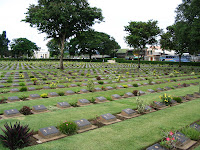
After the disappointment of the “museum” we moved on to the Kanchanaburi War Cemetery where things improved dramatically. This is the site were all the Allied POWs that died on the railway were eventually laid to rest. It is an immaculately kept and presented place and is much more befitting place to remember the young men who died in this war. There are over 8,000 graves here separated into sections depending on the soldiers’ nationality. The Australian section is quite large and really demonstrates what a significant contribution such a small (population–wise) country made to the conflict in the area. It also is very moving to wander along the tombstones that detail the soldiers’ name, what unit they belonged to, when they died and most sadly the soldiers’ age which in most cases was in the early 20s. The cemetery is really well maintained but discovered this is only due to the fact, like a lot of foreign war graves, they are funded not by the local country but by the respective governments of the dead. At least the Thais do a good job to honour this.

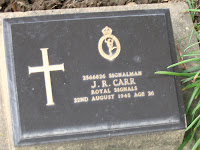
A number of the dead were never identified and the soldiers were either cremated and buried together in the monument below or were accorded their own grave stating only that the soldier was from the Allies and “Known unto God”. While wandering around a came across this grave of a J R Carr in the English section. I did a bit of searching on the internet and I found out only that his name was John Richard Carr, originally from Manchester. Don’t know if related, but it was a little eerie to come across this and very sad to find his age was only 26 (I know when I was 26 I had trouble scratching my arse let alone anything dealing with anything more difficult). Very sobering experience.


After the disappointment of the “museum” we moved on to the Kanchanaburi War Cemetery where things improved dramatically. This is the site were all the Allied POWs that died on the railway were eventually laid to rest. It is an immaculately kept and presented place and is much more befitting place to remember the young men who died in this war. There are over 8,000 graves here separated into sections depending on the soldiers’ nationality. The Australian section is quite large and really demonstrates what a significant contribution such a small (population–wise) country made to the conflict in the area. It also is very moving to wander along the tombstones that detail the soldiers’ name, what unit they belonged to, when they died and most sadly the soldiers’ age which in most cases was in the early 20s. The cemetery is really well maintained but discovered this is only due to the fact, like a lot of foreign war graves, they are funded not by the local country but by the respective governments of the dead. At least the Thais do a good job to honour this.


A number of the dead were never identified and the soldiers were either cremated and buried together in the monument below or were accorded their own grave stating only that the soldier was from the Allies and “Known unto God”. While wandering around a came across this grave of a J R Carr in the English section. I did a bit of searching on the internet and I found out only that his name was John Richard Carr, originally from Manchester. Don’t know if related, but it was a little eerie to come across this and very sad to find his age was only 26 (I know when I was 26 I had trouble scratching my arse let alone anything dealing with anything more difficult). Very sobering experience.


Next, on to the actual River Kwai (or Kwae) Bridge that was made famous due to its bombing by the Americans (just as much by the movie “Bridge on the River Kwai). I remember watching the movie as a kid some time ago (and like all Asian tourist sites, if there is a movie tie-in you can be sure that the DVD is on sale at a near-by stall). I pictured the Bridge to be a lot bigger structure, again the influence of the movie. Found out the movie was shot in Sri Lanka and (obviously) the movie Bridge was “Hollywood-ed Up” to make it more impressive. Still. The Bridge and Railway was originally bombed but has been re-built as a lot of the railway is still used by tourists and locals. The movie only showed a couple of carefully targeted bombs that blew it up. In fact they dropped a shit load of bombs hoping one would hit it. They’ve recovered a lot of them and this photo shows one which I’ve been assured has been de-fused (though typical Thai safety standards are pretty free and easy so I didn’t have the courage to start tapping on this thing).


It only takes about 5 minutes to walk one way across the Bridge (again my movie induced impression was shattered) and only about five people wide. It is a fairly solid structure considering the conditions it was built under. The tourist guides point out that for each sleeper on the railroad a POW died. The men were worked to death under terrible conditions, being starved and beaten by the Japanese prison guards. They would literally drop like flies while it was constructed.


Paid a local vendor to take my photo and you can see why so few photos of me have been exhibited (you can see why these people sell t-shirts for a living and not a more complex profession). Had hoped to get a shot with the Bridge in the background while I posed next to an unexploded bomb. Managed to get most of the Bridge in, everything below my forehead (shame, my do was looking great that day) and something that may be a bomb or could be a bus. The local stall sold a t-shirt proudly proclaiming the local attractions, with a Thomas the Tank like picture with the title “THE DEATH RAILWAY”. Typical of tourist attractions, almost anything that the locals can add the prefix “Death” to they will.


To be continued...


